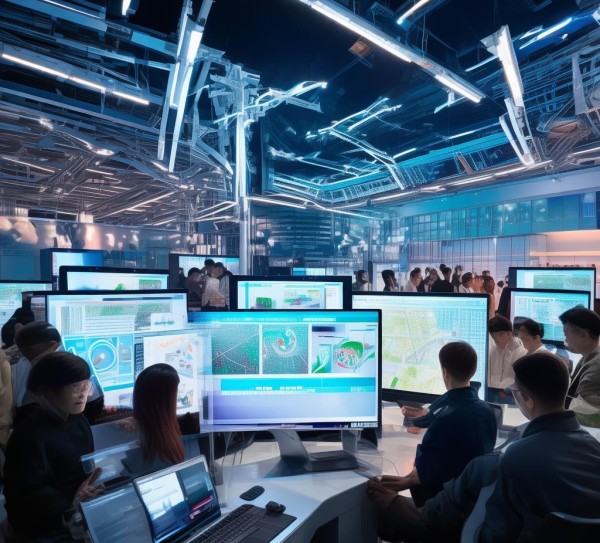


This course focuses on developing skills in English for journali and media, covering topics such as effective communication, media ethics, cultural sensitivity, and professionali. It emphasizes critical thinking, media literacy, and the ability to convey complex ideas clearly and persuasively.
This article explores the significance of a course in English courses of journali and media from a global perspective, emphasizing its relevance in the modern world. Through a comprehensive ysis of its real-world applications, future directions, and societal impact, this paper aims to provide a deeper understanding of how journali and media contribute to the advancement of human civilization and the global stage. Furthermore, it highlights the importance of this course in cultivating critical thinking, communication skills, and a global perspective among students. Ultimately, the course serves as a cornerstone for students to navigate the complexities of the digital age and to contribute to the development of a more informed and responsible society.
Introduction to Journali and Media
Journali and media have long been essential tools for conveying information in a diverse and dynamic world. From the early days of newspapers to the present-day digital platforms, journali has played a pivotal role in shaping public opinion, fostering cultural exchange, and addressing social challenges. As we move beyond traditional borders and into an era of global connectivity, the importance of journali and media cannot be overstated. A course in journali and media provides students with the foundational knowledge and skills necessary to navigate this rapidly changing landscape. In this article, we will explore the significance of such a course from a global perspective.
Realistic Meaning of Journali and Media
The practical applications of journali and media are vast and far-reaching. In the real world, journalists play a crucial role in shaping public perception and influencing public opinion. They often work in crises, such as natural disasters or social movements, where their expertise is essential for providing timely and accurate information. Additionally, journalists serve as bridges between audiences and experts, helping to bridge the gap between the two. Through their reporting, they contribute to the construction of knowledge and the development of cultural understanding. Furthermore, the skills and mindset gained from journali and media education are highly transferable to other fields, such as business, politics, and education.
In the real world, the impact of journali and media extends beyond the pages of newspapers and magazines. They are involved in organizing public campaigns, engaging in cultural exchanges, and addressing pressing social issues. For example, a journalist working in urban planning might use their reporting skills to influence policy decisions that affect the city's development. Similarly, a journalist in the field of public health might use their reporting to raise awareness about diseases and inform the public about preventive measures. Thus, the skills and mindset of journalists are not only useful in the newsroom but also in the broader societal context.
Future Directions of Journali and Media
The field of journali and media is constantly evolving, driven by technological advancements and changing societal needs. One of the most significant trends in journali and media today is the increasing digitization of news and communication. Digital platforms, such as social media, video conferencing, and online news aggregators, have revolutionized how information is shared and consumed. Journalists are now required to adapt to this new landscape, developing new skills and techniques to effectively communicate in a digital world. For example, journalists must now learn how to create engaging online content, engage with audiences, and handle complex social media challenges.
Another important direction is the emphasis on global communication in journali and media. In today's interconnected world, journalists are expected to work with people from diverse backgrounds, cultures, and regions. This requires a deeper understanding of cross-cultural communication and the ability to navigate the complexities of global relations. Journalists must also be more vigilant in addressing issues such as discrimination, inequality, and social justice, which are increasingly relevant in the global context.
Moreover, the role of journalists in ethical and responsible journali is growing. Journalists are now expected to uphold the principles of integrity, fairness, and transparency in their reporting. This involves not only adhering to ethical guidelines but also fostering a culture of accountability and responsibility in the media industry. Journalists must also learn how to handle sensitive topics with care and nuance, ensuring that their reporting is respectful of all parties involved.
Conclusion
In conclusion, a course in English courses of journali and media is not only a valuable academic experience but also a cornerstone of critical thinking and global awareness. Through its focus on real-world applications, future directions, and societal impact, such a course prepares students to navigate the complexities of the digital age and to contribute to the development of a more informed and responsible society. As the world continues to evolve, the importance of journali and media will only grow, making this course an essential part of every student's education. Ultimately, the skills and mindset gained from journali and media will serve as a foundation for lifelong learning and the pursuit of a better, more equitable world.